


At a Glance
- Window film helps reduce solar heat gain, glare and harmful UV rays, but it remains fixed on the glass.
- Cellular shades add an insulating air barrier that can improve comfort in both hot and cold weather.
- Solar shades are one of the closest adjustable alternatives because they filter glare and block UV rays while preserving the view.
- Room darkening shades, shutters and layered window treatments provide privacy and benefits that clear or reflective film cannot.
- The right choice depends on your windows, climate, view, privacy needs and how much control you want throughout the day.
- Both window treatments and heat control window film can reduce solar heat gain so you stay comfortable indoors and lower cooling costs year-round.
Looking for an Alternative to Adhesive Window Film?
When sunlight pours through your windows, it brings more than natural light. It can also increase unwanted heat, glare and UV exposure that make rooms uncomfortable and force your cooling system to work harder. That is why many homeowners begin searching for heat control window film, window film for heat rejection, decorative film, or heat blocking window film.
Heat rejection film can be useful, but it is not the only way to address the problem. Custom window treatments are one of the most effective ways to improve insulation, manage sunlight, increase privacy, and enhance the finished look of a room. Depending on the product, they can be opened, closed or adjusted as the sun moves, giving you more flexibility and natural light than a permanent layer applied directly to the glass.
Below, we compare window film with several practical alternatives from SelectBlinds, including cellular shades, solar shades, blackout shades, shutters and exterior solar shades.

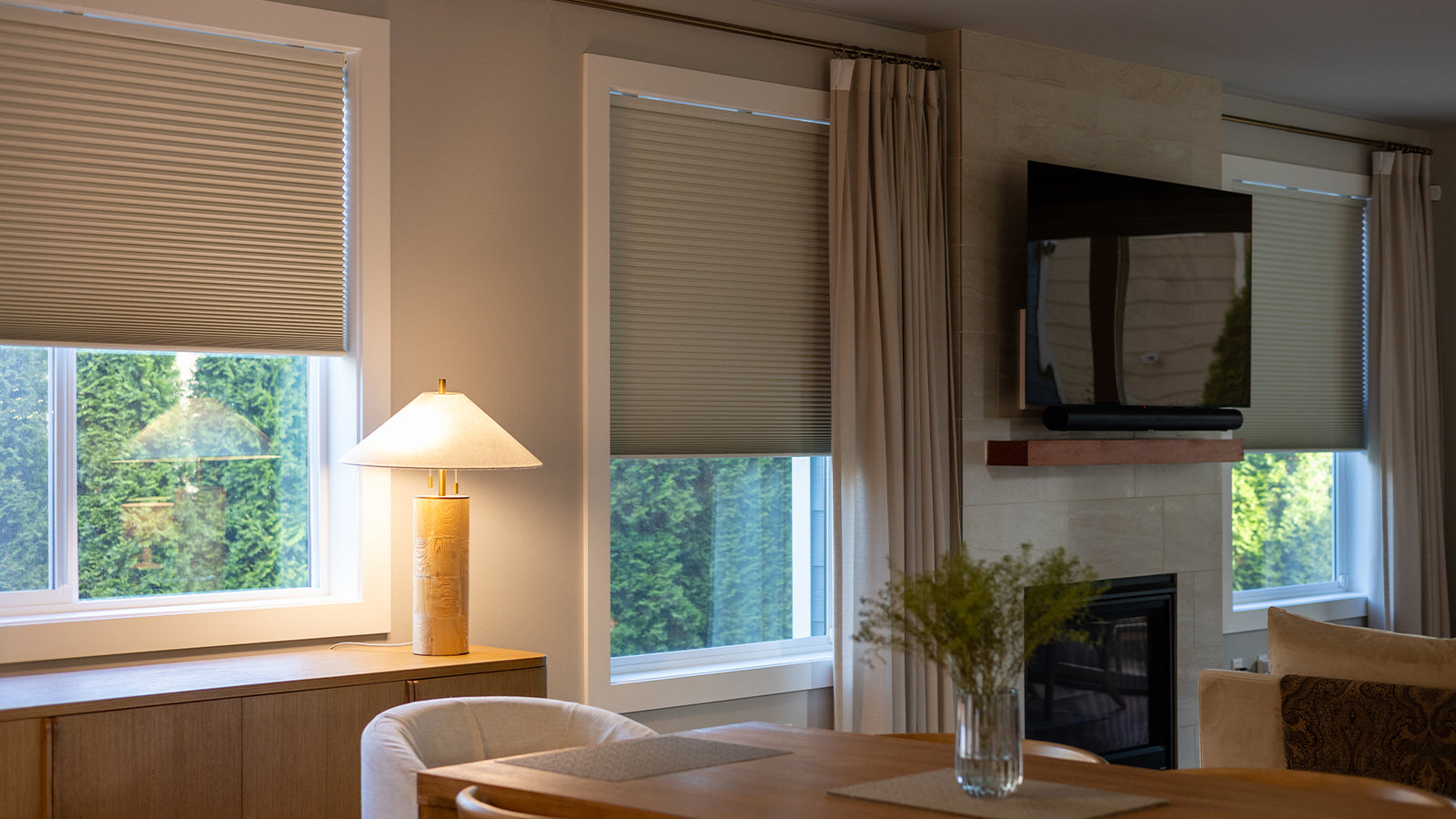
Photo by @missjessicanicolehome: LEVOLOR Designer Light Filtering Cellular Shades in Designer Daylight DC
How Window Film Helps Manage Solar Heat
Window film is a thin material applied directly to the interior or exterior surface of window glass. Different films are designed to absorb or reflect portions of the sun’s energy providing heat reduction before that heat moves farther into the room.
Depending on the product, solar film may help reduce solar heat gain, filter UV rays, soften glare or create a more reflective appearance. Heat reflective film is often considered for large, sunny windows where maintaining the exterior view is important.
Because the film stays attached to the glass, however, its performance and appearance remain essentially the same throughout the day. You cannot raise it to welcome more winter sun, lower it for afternoon privacy or change the amount of light entering the room.
Benefits of Window Film for Heat
- Can provide heat reduction through sunny windows
- Provides glare reduction for televisions, computer screens and other digital displays
- May reduce UV exposure that contributes to fading
- Preserves the view better than an opaque covering
- Does not require daily operation once installed
Limitations of Window Film
It offers limited flexibility
Window film performs the same way all day. It cannot be opened when you want more daylight or closed when you need stronger privacy and heat control.
Privacy may be inconsistent
Clear film generally provides little privacy. Reflective film can improve daytime privacy, but its effect may reverse after dark when interior lights are brighter than the light outside.
It does not add a substantial insulating layer
Film mainly addresses heat reduction at the glass. It does not create the same interior air pocket or physical barrier provided by insulating cellular shades, shutters or layered treatments.
The appearance is relatively permanent
Some products darken the glass, change exterior reflectivity or create a slight tint. Removal and replacement can also require more effort or professional installation versus changing a shade or blind.
One advantage of custom window treatments is aesthetic flexibility. While some window films create a permanent tinted or reflective appearance, shades, shutters and curtains are much easier to change if your décor, color palette or design preferences evolve over time.
It may not be appropriate for every window
Compatibility can vary by glass type, window construction and manufacturer warranty. Homeowners should review the film and window manufacturer requirements before installation.
Why Choose Window Treatments Instead?
The biggest advantage of window treatments is control. You can lower them during the hottest part of the afternoon, raise them when you want a clear view and adjust them for changing privacy needs. Many styles also create an insulating layer between the room and the window.
Custom window treatments can solve several needs at once: enhancing your home's comfort, managing glare, blocking light, increasing privacy and complementing the room's design.
Best Alternatives for Heat Reducing
1. Cellular Shades: Best for Year-Round Insulation
Cellular shades - also called honeycomb shades - are one of the strongest alternatives when energy efficiency is the main goal. Their cellular construction traps air in pockets, helping slow heat transfer at the window to support energy savings and more consistent indoor temperatures. This helps maintain more consistent indoor temperatures year-round, keeping your home more comfortable during hot summers while also minimizing heat loss in colder months.
Cellular shades can be raised when you want daylight or passive solar warmth. Select light-filtering fabrics for soft natural light or blackout cellular shades for stronger light control, privacy and nighttime comfort.
Explore custom cellular shades

Photo by @stephanystyled: Green Living Cordless Light Filtering Cellular Shades in Sustainable White
2. Solar Shades: Best for Glare Control and Preserving the View
Solar shades are one of the closest window-treatment alternatives to heat reflective window film. Their performance fabrics are designed to filter sunlight, reduce glare and limit UV exposure while maintaining varying degrees of outward visibility.
The openness factor helps determine the balance between view and protection. Lower openness percentages generally provide stronger glare and solar control, while higher openness percentages preserve more of the view. Solar shades are especially useful in living rooms, home offices, sunrooms and other spaces with large sunny windows.

Photo by @this.cozy.abode: Premier Modern Solar Screen in Parchment White
3. Room Darkening Shades: Best for Bedrooms and Media Rooms
Window film designed for heat control can reduce sunlight, but it usually does not create the deep darkness many homeowners want in bedrooms, nurseries or media rooms. Room-darkening shades are designed to block most incoming light while adding privacy and another barrier at the window.
For stronger thermal performance, consider blackout cellular shades. Their light-blocking fabric and honeycomb construction address both darkness and insulation. Outside mounting can also help reduce light gaps around the edges of the window.
Browse Room Darkening Window shades
4. Shutters: Best for Adjustable Privacy and Lasting Style
Interior shutters provide a solid, durable alternative to film. Adjustable louvers allow you to redirect sunlight, reduce glare and improve privacy without completely covering the window. When closed, the shutter panels create another physical layer between the room and the glass.
Shutters are a strong choice for homeowners who want long-lasting architectural style along with flexible light control.

Photo by @thedressybostonian: Click2Fit No-Drill Shutters
5. Exterior Solar Shades: Best for Stopping Sun Before It Reaches the Glass
One of the most effective ways to address solar heat is to intercept sunlight before it reaches the window. Exterior solar shades mount outside and help shade windows, patios and covered outdoor areas from intense sun and glare.
They are especially useful for west-facing windows, sliding doors and outdoor living spaces that receive strong afternoon sunlight. Because they reduce exposure on the exterior side, they can complement interior window treatments for a layered approach.
6. Layered Window Treatments: Best for Maximum Flexibility
Layering two treatments can provide more complete control than either product alone. For example, pair a solar shade with drapery to preserve the daytime view while adding softness and nighttime privacy. Or combine an insulating cellular shade with decorative side panels for enhanced comfort and a finished designer look.
Layering allows each treatment to perform a specific role—solar control, insulation, privacy, room darkening or decoration—without expecting one product to do everything.

Photo by @nickievu: LEVOLOR x Select Roman Shades in Pure Linen & LEVOLOR x Select Drapery in Wilton Natural Weave
Window Film vs. Window Treatments
Can You Use Window Film and Shades Together?
Yes. These can be used together when the glass and film manufacturers confirm compatibility. Film can help reduce solar energy at the glass, while shades add adjustable light control, privacy and, in the case of cellular shades, interior insulation.
This combination may be useful for extremely sunny windows, but it is not always necessary. In many rooms, the right custom window treatment can provide the desired balance of comfort, glare control, privacy and style on its own.
Which Option Is Right for Your Home?
Whether you're considering heat-control or decorative window film, custom window treatments often provide greater flexibility with adjustable light control, privacy and insulation. It may also appeal to homeowners who do not want a visible treatment placed on the glass.
Window treatments are usually the more versatile choice when you also want privacy, adjustable daylight, room darkening, insulation or a decorative finish. Cellular shades are especially well suited to year-round comfort, while solar shades provide a strong balance of view-through visibility and glare reduction.
Before choosing, consider the direction the window faces, the time of day the room becomes hottest, whether privacy is needed after dark and whether you want the option to automate the treatment. Selecting the right solution for each room often produces better results than applying the same product throughout the entire home.
Find the Right Heat-Reducing Window Treatment
You do not have to settle for uncomfortable rooms or permanently tinted glass. SelectBlinds offers custom window treatments designed to help manage sunlight, heat, glare and privacy while supporting energy savings throughout the year.
Choose up to 15 free samples to compare fabrics, colors, textures and openness levels in your own light before ordering. Sampling can help you find the right balance of solar control, insulation and design for every room.
Shop energy-efficient window treatments

Photo by @hamiltonhaven5: Premier Double Cellular Blackout Cellular Shades in Magnolia DC
Frequently Asked Questions
Does window film reduce heat?
Yes. Heat control window film can reduce some solar heat gain by absorbing or reflecting portions of the sun’s energy. Results vary by film type, glass, installation quality and window orientation.
Can window film affect the look of your windows?
Yes. Some window films create a tinted or reflective appearance that becomes part of the window itself. If your style changes later, replacing or removing the film usually takes more time and effort than updating shades, shutters or curtains, making window treatments the more flexible option for evolving interiors.
What is the best alternative to heat blocking window film?
Cellular shades are one of the best all-around alternatives because their honeycomb construction adds insulation while also providing adjustable light control and privacy. Solar shades are a strong alternative when glare reduction and preserving the view are the top priorities.
Will window treatments reduce my cooling costs?
Yes, they can. While savings vary based on your climate, window orientation, and the type of window treatments you choose, insulating shades, cellular (honeycomb) shades, shutters, and well-fitted drapes can help improve energy efficiency and energy savings, by limiting the sun's heat entering your home and helping maintain more consistent indoor temperatures.
Are cellular shades better than window film for heat?
They solve the problem differently. Film targets solar energy at the glass, while cellular shades create an insulating air barrier inside the room. Cellular shades also provide privacy and adjustable light control, making them more versatile for many homes.
Do solar shades keep a room cooler?
Solar shades can help reduce solar heat gain and glare by filtering intense sunlight before it spreads through the room. Performance depends on fabric color, openness factor, window orientation and how closely the shade fits the window.
Do room-darkening shades help block heat?
Blackout shades can reduce direct sunlight and add a barrier at the window. Blackout cellular shades generally provide stronger insulating performance than a flat blackout fabric because their honeycomb cells trap air.
Is reflective window film good for privacy at night?
Not necessarily. Reflective film generally works best for daytime privacy when it is brighter outdoors than indoors. At night, interior lighting can make the inside of the home visible from outside, so a shade, blind or curtain may still be needed.
Can window film damage windows?
Some films may be unsuitable for certain glass types or insulated window units. Review the film manufacturer’s compatibility guidance and your window warranty before installation.
Can I motorize heat-reducing window treatments?
Many cellular, solar, roller and other shade styles are available with motorized operation. Motorization makes it easier to lower shades during peak sun hours and raise them when you want more daylight or a clearer view.