


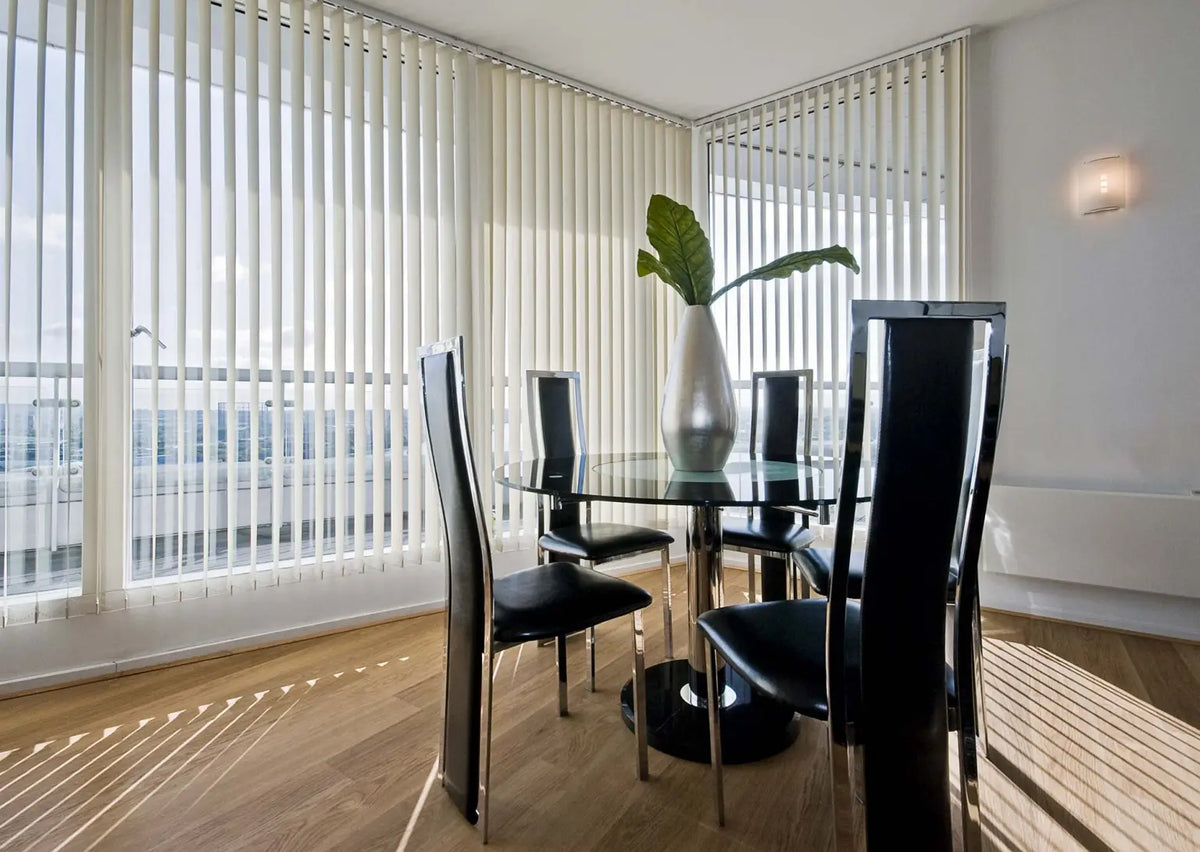
Sliding doors let in the light. Your window treatment should make it easy to control.
Sliding glass doors are brilliant at bringing the outside in. Lots of daylight, a great view and easy access to your patio or backyard.
The tricky bit? Finding a window covering that gives you privacy and control over the light without getting in the way every time you open the door.
The best window treatments for sliding glass doors are designed for wide spaces and easy everyday movement. Panel track blinds, vertical blinds, vertical cellular shades and curtains are all great options. They just work in slightly different ways.
Here’s how to find the right one for your space.
The best blinds and shades for sliding glass doors
For most sliding glass doors, panel track blinds, vertical blinds and vertical cellular shades are the best places to start. They’re designed to cover wide windows and move from side to side, just like your door.
Panel tracks give you clean, contemporary lines. Vertical blinds make it easy to adjust the light throughout the day. And vertical cellular shades add an extra layer of insulation. Curtains and drapes are another good option if you prefer something softer.
The right choice comes down to how often you use the door, how much light and privacy you want, and what feels right in your room.
 2″ Premier Light Filtering Vertical Cellulars in Puffy Cloud
What to look for in sliding glass door window treatments
Before choosing a style, think about how you actually use the door. A few things can make the decision much easier:
- Easy access: If it’s the door everyone uses to reach the patio, backyard or balcony, look for a treatment that moves easily out of the way.
- Light control: Sliding glass doors let in a lot of daylight. Think about whether you want to soften glare, filter sunlight or block more of it.
- Privacy: That beautiful wall of glass can feel a little different after dark. Think about how much coverage you want when your window treatment is closed.
- Stacking space: Some treatments stack neatly to one side, while others need a little more room when they’re open.
- Insulation: If keeping the room comfortable is high on your list, a more insulating treatment such as a vertical cellular shade may be worth considering.
So, which sliding door covering ticks your boxes?
Panel track blinds: made for wide-open spaces
If you like clean lines, panel track blinds are one of our favorite options for sliding glass doors.
Instead of lots of narrow vertical slats, panel tracks use wide fabric panels that glide horizontally along a track. Open them and the panels stack neatly together. Close them and you get broad, clean coverage across your door.
That side-to-side movement feels right at home on a sliding door. Your door slides, and your shade does too.
They’re particularly useful across large expanses of glass, where a conventional shade can start to feel cumbersome.
Depending on the material you choose, panel track blinds can filter light, reduce glare and add privacy while still keeping your room feeling bright. Solar fabrics are especially useful in sunny spaces when you want to soften glare without saying goodbye to all that daylight.
Panel track blinds are a good choice if you want:
-
A clean, contemporary look
-
Coverage for wide sliding doors
-
Easy side-to-side operation
-
Light-filtering or solar fabric options
-
An alternative to traditional vertical blinds
They can even work as room dividers in larger, open spaces.
 Casual Light Filtering Panel Track in Muslin White
Vertical blinds: the practical classic
There’s a reason vertical blinds for sliding patio doors have been paired together for so long: they work.
The vertical vanes move in the same direction as the door, so you can slide them out of the way when you need access. Tilt the vanes to adjust the daylight throughout the day, or close them when you’d like more privacy.
And vertical doesn’t have to mean one particular look. Different materials, colors and finishes give you plenty of ways to make this practical option feel at home in your room.
Vertical blinds are a good choice if you want:
-
Easy access to a frequently used door
-
Adjustable light control
-
Plenty of material and style choices
-
A practical option for a large opening
For a softer take, sheer vertical shades combine easy vertical operation with fabric that gently filters the light.

Modern Sheer Vertical Shades in Oyster Grey
Vertical cellular shades: comfort built in
Got a lot of glass? You’ve probably noticed it can make a difference to how comfortable the room feels.
That’s where vertical cellular shades come in.
Their honeycomb-shaped cells trap pockets of air to add insulation at the window, while still giving you control over light and privacy. If energy efficiency is high on your list, you can also learn more about how cellular shades work.
Unlike standard cellular shades that move up and down, vertical cellular shades move horizontally, making them much better suited to sliding doors.
Vertical cellular shades are a good choice if you want:
-
Added insulation
-
A soft, streamlined appearance
-
Light-filtering or blackout options
-
A shade designed for wide doors
For rooms where you want maximum light control, blackout vertical cellular shades are another option designed specifically for patio doors and large windows.
Curtains and drapes: soften the view
If you’d rather soften all that glass, custom curtains or drapes are another natural fit.
Pull them clear of the door when you want to make the most of the sunlight and view, then close them when you’d like more privacy. Your choice of fabric and lining also gives you plenty of control over how much light comes into the room.
They’re especially useful if you want your sliding door treatment to feel like part of the room’s decor, rather than simply something covering the glass.
Curtains are a good choice if you want:
-
A softer, more decorative look
-
Lots of color, fabric and texture choices
-
Flexible light and privacy control
-
The option to layer window treatments
Just make sure there’s enough room beside the door for the fabric to stack when it’s open.
 Photo by @chlobellexx: Classic Curtains in White Linen
Panel track blinds vs. vertical blinds: which is better?
Both are great options for sliding doors. The difference mostly comes down to the look you prefer and how you like to control the light.
Panel track blinds
- Look: Wide, clean fabric panels
- Operation: Panels glide from side to side
- Light control: Depends on the fabric and panel position
- Best for: Modern rooms and wide expanses of glass
- When open: Panels overlap and stack neatly together
Vertical blinds
- Look: Narrow vertical vanes
- Operation: Vanes slide and tilt
- Light control: Tilt the vanes for more precise adjustment
- Best for: Everyday flexibility and frequently used doors
- When open: Vanes stack together at the side
If you love clean, uninterrupted lines, start with panel track blinds. If being able to tilt the covering without fully opening it matters more, vertical blinds have the edge.
If you love clean, uninterrupted lines, start with panel track blinds. If being able to tilt the covering without opening it matters more, vertical blinds have the edge.
What about roller shades?
Roller shades can work on some sliding glass doors, but they wouldn’t be our first choice for a door you use all the time.
They move up and down rather than side to side, which can mean raising the shade whenever you want to use the door.
They’re worth considering if the door isn’t used very often or your particular layout makes a roller shade practical. Otherwise, a treatment that moves in the same direction as your door will usually make everyday life easier.
What window treatments should you avoid on sliding patio doors?
Not every window treatment is at its best on a big sliding door.
Traditional horizontal blinds can become heavy and cumbersome across a wide span. Smaller horizontal slats can also make a large covering more awkward to operate.
Instead, start with treatments designed to handle width and movement. Panel track blinds, vertical blinds and vertical cellular shades all solve those challenges in slightly different ways.
Your sliding door already makes getting outside easy. Its window covering should too.
Sliding glass door window treatment FAQs
What are the best blinds for sliding patio doors?
Panel track blinds, vertical blinds and vertical cellular shades are all strong choices for sliding patio doors because they cover wide openings and move horizontally. Panel tracks offer clean, contemporary lines, while vertical blinds give you more control over the angle of the light.
Are panel track blinds good for sliding glass doors?
Yes. Panel track blinds are particularly well suited to sliding glass doors because their wide panels glide from side to side. They can cover large expanses of glass while stacking out of the way when you want to use the door.
How can I cover a sliding glass door for privacy?
Panel track blinds, vertical blinds, vertical cellular shades and curtains can all give you privacy on sliding glass doors. The next question is how you want the room to feel when they’re closed: softly filtered with daylight, or with more complete coverage.
Can you put regular blinds on a sliding glass door?
You can use some horizontal blinds or shades on sliding glass doors, but they’re not always the easiest option for a door you use regularly. A side-to-side treatment generally works more naturally with the way a sliding door opens.
What’s the best window treatment for a sliding glass door you use every day?
Look for something that moves easily out of the way without needing to be fully raised. Panel track blinds and vertical blinds are particularly practical for frequently used sliding doors because they move horizontally with the door.
Find the right fit for your sliding door
There isn’t one window treatment that’s best for every sliding glass door. The best one is the one that works for how you use yours.
Choose panel track blinds for clean lines and easy coverage across large expanses of glass.
Choose vertical blinds when flexible light control and everyday practicality come first.
Choose vertical cellular shades when added insulation is high on your list.
Choose curtains or drapes when you want softer, more decorative coverage.
Whichever direction you go, start with what matters most in your room: how often you use the door, how much privacy you need and how you want the daylight to feel.
Then let the light in, on your terms.